About Gas Hydrate Autoclaves
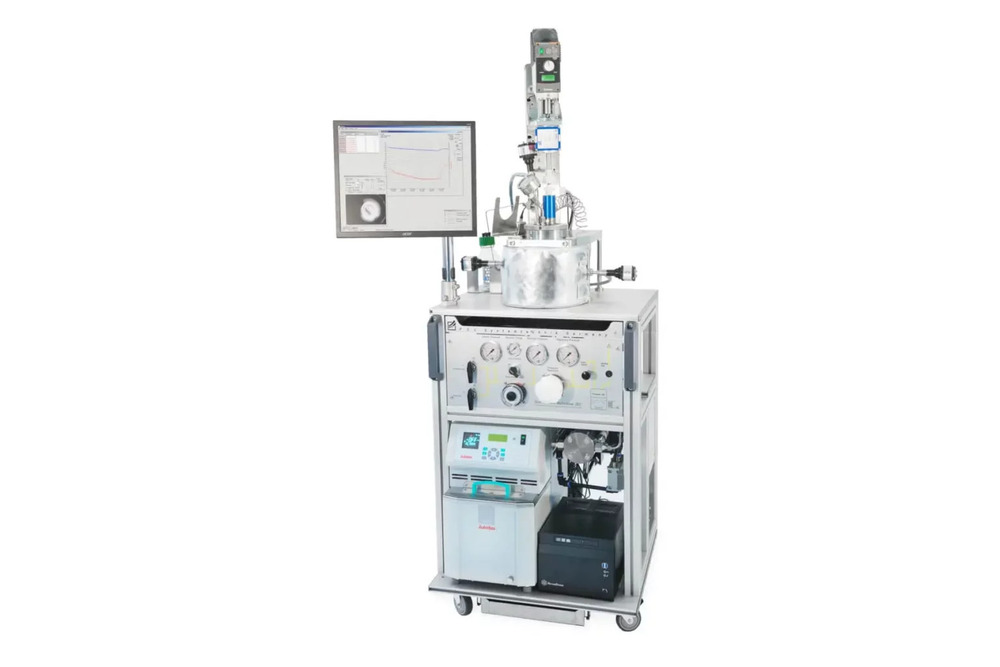
The Gas Hydrate Autoclaves GHA 200 and GHA 350 by PSL System technique are hydrate test cells to determine the effectively and efficiency of kinetic and thermodynamic gas hydrate inhibitors, as well as anti-agglomerates.
The GHA 200 and GHA 350 are the renewed and updated versions of the standard pressure vessels foe examining gas hydrate formation processes.The Gas Hydrate Autoclaves provide multiple features on a footprint.
Features
- Test gas hydrates and KHI.
- Visual supervision of an experiment with up to 3 cameras.
- Photos and video recordings are possible.
- Simulates pipeline conditions.
- Long time experiments.
- Automated test schedule.
- Simple opening mechanism.
Applications
- Research of kinetics and thermodynamics hydrate-inhibitors.
- Analysis of anti-agglomerates.
- Optimization of inhibitors-concentrations.
- Quality control.
-
Robust and Reliable Material ChamberConstructed with SS 316L stainless steel, the material chamber is engineered for superior corrosion resistance and exceptional durability, ensuring longevity even under high-pressure and variable humidity conditions. This makes the autoclave ideal for repetitive and long-term experimental workflows common in gas hydrate research laboratories.
Advanced Safety and Precision EngineeringEquipped with an integrated automatic pressure relief valve and a double O-ring seal for leak-proof operation, the autoclave prioritizes safety and accurate measurements. The digital PID controller manages all experimental parameters, delivering 0.5% F.S. accuracy, while a rapid response time of under 1 second ensures prompt feedback during critical testing phases.
Flexible Control and Data ManagementThe device supports both internal and external data storage, compatible with Windows-based control software, making it easy to manage experimental results. USB and RS-232 interfaces provide convenient data transfer and remote monitoring capabilities, streamlining data acquisition and analysis for laboratory technicians.
FAQs of Gas Hydrate Autoclaves:
Q: How does the Gas Hydrate Autoclave ensure operator safety during high-pressure experiments?
A: Operator safety is maintained through its integrated automatic pressure relief valve and double O-ring leak-proof sealing system, which prevent overpressure and eliminate the risk of gas leaks during high-pressure testing.
Q: What is the process for controlling and monitoring experiments using this autoclave?
A: The autoclave features a digital PID controller for precise parameter management, digital LCD display for real-time monitoring, and Windows-based software for comprehensive control and data acquisition. Settings such as temperature, pressure, and stirring speed are adjustable via the digital interface.
Q: When should external cooling be used, and what options are available?
A: External cooling, available through an optional water circulation jacket, is recommended when experiments involve exothermic reactions or require precise thermal management to maintain the chambers set temperature within the -20C to +80C range.
Q: Where can the Gas Hydrate Autoclave be installed within a laboratory?
A: With its bench/desktop mounting design and compact dimensions (max height 530 mm, weight 80 kg), the autoclave can be conveniently placed on standard laboratory benches, making it suitable for most research environments.
Q: What specimens and sample sizes can be tested with this equipment?
A: The autoclave is capable of handling up to three specimens simultaneously, with customizable specimen size to fit specific research requirements. The test chamber supports a capacity of 1 to 5 liters, accommodating diverse experimental setups.
Q: How does automated data acquisition benefit laboratory researchers?
A: Automated data acquisition helps users collect, store, and transfer experimental data efficiently. This reduces manual recording errors, ensures high data accuracy, and streamlines result analysis thanks to internal/external memory options and compatibility with USB and RS-232 interfaces.









 Send Inquiry